
Lifestyle
Chillin’ in Inglewood at the 2019 Earth Day Music Festival
LOS ANGELES SENTINEL — The festivities were already on and crack a lackin when I arrived on the scene. Several thousand people, 4,000 to be exact, from near and far heeded the invite to join the City of Inglewood for one of their signature events.

By Ricky Richardson
The City of Inglewood partnered with Clippers Arena Inglewood, Consolidated Disposal Service (A Republic Service Company), West Basin Municipal Water District and 102.3 FM, RadioFree KJLH for the annual Earth Day Music Festival, Saturday, April 20, 2019, on the South Lawn of City Hall.
The festivities were already on and crack a lackin when I arrived on the scene. Several thousand people, 4,000 to be exact, from near and far heeded the invite to join the City of Inglewood for one of their signature events.
The City of Inglewood presented this event as part of their commitment to quality living and visionary leadership, to protect and respect the environment. A huge round of applause and shout out are for Angela Williams and Joi Aldridge of the Environmental Services Division of the Public Works Department, for organizing and producing the Earth Day Music Festival. This was a tremendous undertaking with immediate and noticeable rewards-4,000 happy faces and smiles. Various resources booths provided information to raise awareness about our responsibility to Mother Earth.
The host of this fun-filled, engaging family event was none other than, Guy Black, Radio Personality, 102.3 FM, RadioFree KJLH. DJ Jeff Onee manned the soundboards to provide an eclectic mix of music to enhance the vibes of the Earth Day Music Festival.
Singer/Songwriter Phillip Lauth made a returned engagement to entertain the crowd. Mr. Lauth is the artist who holds the record for the most appearances/performances at the Earth Day Music Festival. That says a lot about his popularity.
Actor/comedian Flex Anderson introduced his wife, Shanice as the next performer to take to the stage. Her opening tune was “Can You Dance,” featuring a multi-cultural talented group of dancers. She continued her set with “The Way You Love Me.” The next portion of her set honored her musical influencers, first with “Square Business,” by Teena Marie, “Heart Break Hotel,” by Michael Jackson followed by “Lovin’ You,” by Minnie Riperton. I can assure you that Shanice hit all the high notes and the right notes. Shanice continued her set with “Saving Forever for You,” “Don’t Settle for Less,” “This Love is Real,” “I’ll be Your Fantasy,” “I Love Your Smile,” and closed her set with “I Won’t.”
Club Nouveau consisting of vocalist Jay King, Valerie Watson English and Samuelle Prater laid down a heavy dose of R&B, Soul and high-octane dance tunes. They cast a spell that had the crowd “Under a Nouveau Groove” throughout their set. The opened their set with “Let It Go,” followed by “That Ain’t Love,” from their latest CD/EP Consciousness. Club Nouveau continued their set with “Tonight, Get a Hold of Me,” “Heavy on my Mind,” “Situation #9,” “Why You Treat Me So Bad,” “ I Want to Change the World,” and concluded their set with an up-tempo version of “Lean on Me.”
Susie Hansen Latin Band literally heated up the festivities with a set of spicy, Latin rhythms to the delight of the salseros in the crowd. The sun finally came out during their set. Up until their set, everyone was bundled up on this unusually cold day in the Southbay.
Two soulful crooners performed backed to back sets. Kenny Lattimore and Eric Benet turned up the wow factor to the delight of their adoring fans. Stevie Wonder made a surprise appearance to introduce Eric Benet. What an honor.
The rest is history in the making, ladies and gentlemen, boys and girls. The Conductor of Funk introduced the last and final act of the evening. Con Funk Shun turned up the throttle and went full steam ahead with a set of classic hits from their extended catalog. Their set was “Ffun,” and people had no choice but to “Shake and Dance with Me” throughout their highly entertaining set.
This evening will go down in the record books as the largest and most successful Earth Day Music Festival in Inglewood. The producers of this year’s festival raised the bar for future celebrations. Don’t be surprise if next year’s stellar line-up continues to broaden and enhance the Earth Day Music Festival, one of several signature events in the City of Inglewood. Stay Tuned!!!
This article originally appeared in the Los Angeles Sentinel.










Black History
NABJ Convention Brings Black Journalists, Civic Leaders Together in Atlanta
Among the conference’s most closely watched sessions was Thursday’s Newsmaker Plenary, where House Democratic Leader Hakeem Jeffries discussed the national political climate with NABJ President Errin Haines. Journalist Joy-Ann Reid later led a fireside conversation with legal scholar Kimberlé Crenshaw, creator of the term “intersectionality,” and Pulitzer Prize-winning journalist Nikole Hannah-Jones, author of the 1619 Project.

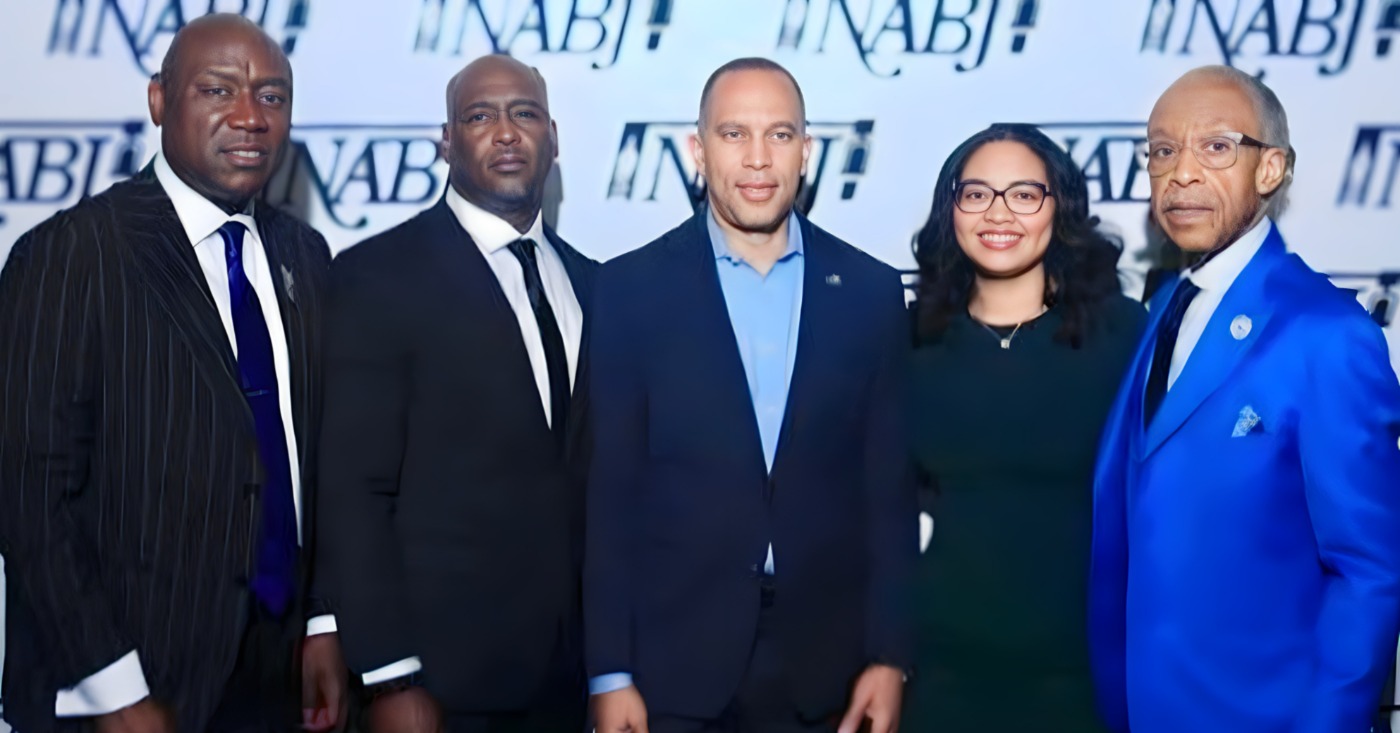
ATLANTA—The 52nd National Association of Black Journalists conference brought thousands of journalists, students, media executives and civic leaders to Atlanta Aug. 12-16 for its 2026 Convention and Career Fair, a five-day gathering centered on the theme “Our Revolution: Truth, Power and Black Journalism.”
Among the conference’s most closely watched sessions was Thursday’s Newsmaker Plenary, where House Democratic Leader Hakeem Jeffries discussed the national political climate with NABJ President Errin Haines. Journalist Joy-Ann Reid later led a fireside conversation with legal scholar Kimberlé Crenshaw, creator of the term “intersectionality,” and Pulitzer Prize-winning journalist Nikole Hannah-Jones, author of the 1619 Project.
The plenary also turned toward grief, accountability and justice as the parents of 18-year-old Nolan Wells, Christine Wells-Wonsley and Elmore Wonsley, appeared with civil rights attorney Ben Crump and the Rev. Al Sharpton. Crump was also the attorney for Trayvon Martin’s, Michael Brown’s, and Tamir Rice’s families. Moderated by journalist Tiffany Cross, the Wells family’s appearance focused on unanswered questions surrounding Nolan’s July death in Mississippi and calls for a federal review.
Reid and journalist Don Lemon also joined a separate discussion with Cross, columnist Michael Harriot and journalist Chandra Whitfield about career disruption, resilience and building independent platforms as Black journalists face layoffs and wider media industry upheaval.

Across generations, attendees exchanged ideas about sustaining careers and serving Black communities.
The gathering reflected NABJ’s long-standing role as both professional home and public forum for Black journalists. For Black-owned legacy newspapers, including ours, the Atlanta convention reinforced a familiar mandate: defend truth, elevate Black voices and connect national debates over politics, justice and media power to the communities most affected.

Activism
Oakland Post: Week of August 12 – 18, 2026
The printed Weekly Edition of the Oakland Post: Week of August 12 – 18, 2026

To enlarge your view of this issue, use the slider, magnifying glass icon or full page icon in the lower right corner of the browser window.
Commentary
ESSAY: California Can Close Its Colorectal Cancer Gap
POST NEWS GROUP — The numbers are stark. From 2014 through 2018, the age-adjusted colorectal cancer incidence rate was 40.2 cases per 100,000 Black Californians, compared with 35.8 among non-Hispanic White Californians. The mortality rate was 25.3 deaths per 100,000 among Black Californians and 17.7 among White Californians—a 43% difference.
Every breakthrough in cancer care carries a promise: earlier detection, better treatment and longer life. California has helped deliver that promise through world-class cancer centers, a statewide cancer registry and major public-health investments. Yet colorectal cancer still exposes a painful divide: Black Californians are more likely to develop the disease and far more likely to die from it than their White neighbors.
The numbers are stark. From 2014 through 2018, the age-adjusted colorectal cancer incidence rate was 40.2 cases per 100,000 Black Californians, compared with 35.8 among non-Hispanic White Californians. The mortality rate was 25.3 deaths per 100,000 among Black Californians and 17.7 among White Californians—a 43% difference.
A later state analysis showed that the incidence gap remained in 2021, at 39.0 versus 35.0 cases per 100,000.
These differences should not be treated as an inevitable consequence of biology. The more revealing explanation lies in what happens—or fails to happen—across the cancer-care continuum: prevention, screening, diagnostic follow-up, treatment and surveillance after treatment.

Colorectal cancer is one of the few cancers that screening can sometimes prevent. Colonoscopy can find and remove precancerous polyps, while stool-based tests can identify people who need further evaluation. The U.S. Preventive Services Task Force recommends screening for average-risk adults from ages 45 through 75, with several acceptable options. But a screening test saves no one if it is never offered, never completed or not followed by a timely colonoscopy after an abnormal result.
California’s cancer-burden report shows both the urgency of the problem and a troubling data gap. Nearly six in 10 colorectal cancers were diagnosed at a regional or distant stage among both Black and White patients from 2009 through 2018. The racial difference in stage was not statistically significant. Yet, the registry report did not include screening information, so it could not show who was offered a test, who completed it or who received the necessary colonoscopy afterward. It also did not assess whether survivors completed recommended follow-up. California can count cancers and deaths, but it cannot yet see every missed opportunity that produced them.
The disparities become clearer after diagnosis. A California Cancer Registry study of nearly 27,000 people with stage I through III colorectal cancer found that Black patients had 39% higher odds of receiving less than guideline-recommended treatment and 78% higher odds of waiting more than 60 days for treatment than White patients. Neighborhood socioeconomic disadvantage explained part of the substandard treatment, but racial differences persisted even after researchers accounted for where patients lived.
Survival reflects the accumulation of these missed opportunities. Among Californians diagnosed from 2009 through 2013, five-year relative survival was 58.8% for Black patients and 65.1% for White patients. After researchers adjusted for age, insurance, neighborhood income, stage, chronic illness and other factors, the survival difference was no longer statistically significant. That does not make the gap less serious. It identifies much of it as potentially preventable: when access, timing and health conditions are unequal, survival will be unequal too.
California already has proof that a better system can work. Kaiser Permanente Northern California built an organized program that identified eligible patients, mailed annual home stool tests to those overdue, offered colonoscopy as an alternative, and tracked abnormal results through follow-up. Screening among Black members rose from about 40% in 2009 to 80% in 2019. Over the same period, their colorectal cancer death rate fell from 54.2 to 20.9 per 100,000, essentially eliminating the Black-White mortality gap within that health system.
The lesson is not that every Californian must join one health plan. It is that equity requires organized care rather than reliance on chance encounters. Mailed screening outreach, patient navigation and guaranteed follow-up colonoscopy should become standard across Medi-Cal, county health systems and community clinics. Health systems should publicly report screening completion; time from a positive stool test to colonoscopy; time from diagnosis to treatment; receipt of guideline-concordant therapy; and completion of post-treatment surveillance—each stratified by race, insurance, and neighborhood.
Transportation, paid time off, bowel-preparation costs, childcare and distrust are not side issues; they determine whether patients can complete care. Community organizations, churches, clinicians and public hospitals should help design outreach from the beginning, not merely deliver messages created elsewhere. Survivors should leave treatment with a clear surveillance plan, navigation support and reminders that do not disappear when active therapy ends.
Closing California’s colorectal cancer gap is achievable. The state has the tests, specialists, data systems and proof of concept. What it needs is the will to connect them. Success should be measured not only by how many cancers we treat, but by how many we prevent, how quickly we act and whether every Californian has an equal opportunity to survive.
About the Authors
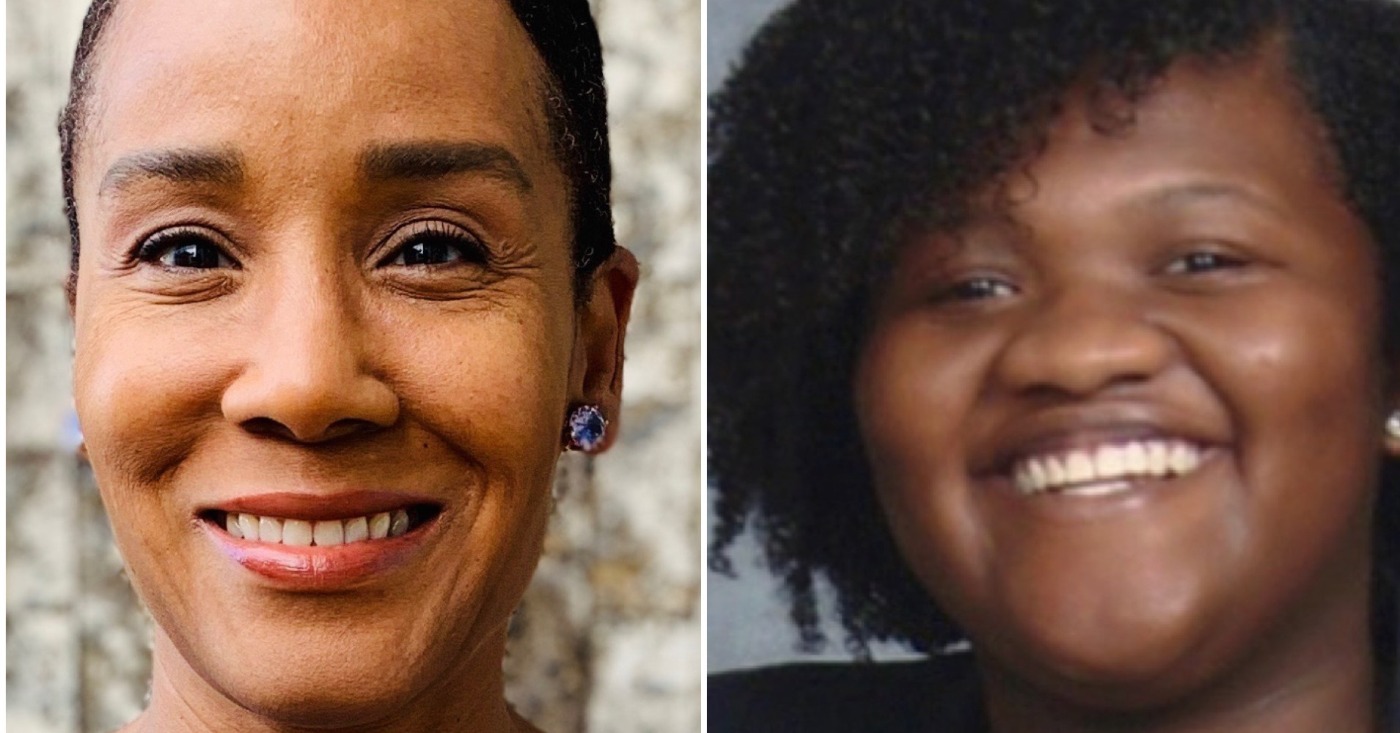
Gracie Ann E. Dinkins, MD, FACS, is a Clinical Assistant Professor of Surgery and Surgery Clerkship Director at the Charles R. Drew University College of Medicine, Department of Surgery. Her mission is to help realize the CDU vision: Excellent health and wellness for all in a world without health disparities.
Sydney Y. K. Brown, MA, is a medical student at the Charles R. Drew University College of Medicine whose work focuses on clinical research, community engagement, and health equity. She is committed to advancing equitable access to high-quality care and improving health outcomes in underserved communities.

WORK FROM HOME
Home-based business with potential monthly income of $10K+ per month. A proven training system and website provided to maximize business effectiveness. Perfect job to earn side and primary income. Contact Lynne for more details: Lynne4npusa@gmail.com 800-334-0540


Oakland Protesters Rally to Defend Haitian Immigrants and TPS

First 5 Alameda County Celebrates First Year of Measure C’s Implementation

From Palestine to Oakland: Seeds for Liberation Examines Shared Struggles for Freedom

NABJ Convention Brings Black Journalists, Civic Leaders Together in Atlanta

At Sacramento Summit, Becerra Discusses Policy; Uses “Family” Metaphor to Frame Case for National Political Unity

$5 Billion Coliseum Vision Puts Oakland Jobs, Businesses at Center

Gov. Newsom Nominates 3 Black Women Judges to Serve on State Courts of Appeal

Oakland Observes Black August with Block Parties, Film Showings, Workshops

NPRC Elder Justice Symposium Invites Community to Join Effort to Protect Alameda County Elders

Four Candidates, Including Incumbent Barbara Lee, Qualify for Oakland Mayor’s Race

Oakland Observes Black August with Block Parties, Film Showings, Workshops

Oakland Post: Week of August 12 – 18, 2026

COMMENTARY: Why Local School Tax Measure G1 Will Not Be on the November Ballot

California Hispanic Chambers of Commerce Unveils: ‘Powering the Future’ Theme for 47th Annual Statewide Convention

Returning to Its Roots, the Oakland Black-Eyed Pea Festival Partners with the Freedom Farmers Market Sept. 12

Department of Homeland Security Demands California Secretary of State Shirley N. Weber Scrub Voter Rolls

New Judge Could Decide if Karmelo Anthony Gets a New Trial

Oakland Children’s Hospital Workers and Patients Rally for Pediatric Medical Care

“The Power to See Threats Sooner”: Gov. Newsom, Safety Officials Showcase California’s Investments in Hi-Tech Wildfire Prevention

Alpha Kappa Alpha Sorority, Inc. Celebrates New North Atlantic Regional Director

Surveillance Pricing Fight: State Senate Debates Bill Banning Retailers from Using AI to Set Prices Based on a Buyer’s Profile

Mount Zion MBC, Church of Jesus Christ of Latter-day Saints Partner to Bring 29,000 Meals to Alameda County

California Sen. Padilla Joins Colleagues to Introduce Bill Imposing Term Limits on Supreme Court Justices

Less Affluent School Districts, Including Sacramento City, Face Threat of State Takeover

Starting This Summer, California Car Buyers Can Get an Instant $3500 Off the Cost of Electric Vehicles

Car Wash Workers Cope with Lingering Impacts of ICE Raids

COMMENTARY: You Are Already Paying for the AI Boom

California Bill Would Let Abuse Victims Use Trauma as Legal Defense for Violent Crime

Fed Court to Decide Landmark First Amendment Case

Gov. Gavin Newsom Signs Law Streamlining Affordable Housing Rules

The Conversation With Al McFarlane 6/23/26

Media Monday 6/22/26

LIVE! ASK ALMA! — TUES. 6.23.26 7PM EST

Car Buying Secrets: 4 Hidden Checks Before You Sign!

Is This 550 HP Charger Worth YOUR Money? AutoNetwork Review

Celebrating Juneteenth – Frederick Douglass on education and resistance

LIVE! — ASK ALMA! — TUES. 6.19.26 7PM EST

Hyundai Ioniq 5 Parking, Safety, and 360 View #shorts

2025 Ioniq 5 New Wiper & Powerful Performance! #shorts

Electric SUV Range: Is 259 Miles Enough? #shorts

EV Charging: How Fast Can You Charge an Electric Vehicle? #shorts

Biometric Cooling… Messaging Seats…Come on! 2025 Infiniti QX80 Autograph 4WD

Charged Up: Witness the Magic of a Fully Electric Car! #shorts

Range Rover Sport PHEV Included…: See What’s Inside This Luxury SUV! #shorts

Invisible Hood View: Perfect Parking with X-Ray Vision! #shorts
-
 Featured2 weeks ago
Department of Homeland Security Demands California Secretary of State Shirley N. Weber Scrub Voter Rolls
-
 #NNPA BlackPress3 weeks ago
New Judge Could Decide if Karmelo Anthony Gets a New Trial
-
 Business4 weeks ago
Oakland Children’s Hospital Workers and Patients Rally for Pediatric Medical Care
-
 Environment2 weeks ago
“The Power to See Threats Sooner”: Gov. Newsom, Safety Officials Showcase California’s Investments in Hi-Tech Wildfire Prevention
-
 Black History2 weeks ago
Alpha Kappa Alpha Sorority, Inc. Celebrates New North Atlantic Regional Director
-
 Business4 weeks ago
Surveillance Pricing Fight: State Senate Debates Bill Banning Retailers from Using AI to Set Prices Based on a Buyer’s Profile
-
 Business4 weeks ago
Mount Zion MBC, Church of Jesus Christ of Latter-day Saints Partner to Bring 29,000 Meals to Alameda County
-
 Featured2 weeks ago
California Sen. Padilla Joins Colleagues to Introduce Bill Imposing Term Limits on Supreme Court Justices
