
Community
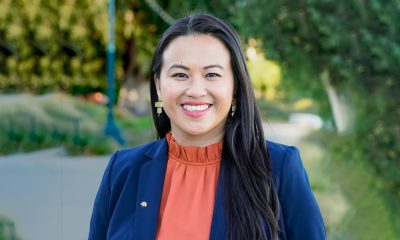
SF Chronicle’s New Editor-in-Chief Audrey Cooper, In A League Of Her Own

San Francisco – When you are passionate about your job, the day goes by fast.
You lose track of the time because you are knee deep in work. All the different projects, deadlines and requests can pull a person in different directions and can stress you out.
But not this woman. She was doing her job – an exemplary job – and she had no idea that there would be such an enthusiastic response when her promotion was announced.
“I was really surprised by the amount of attention my promotion got because of my gender and age,” Audrey Cooper said. “I told my husband on the day it was going to be announced that I might be home early because I don’t think anyone is going to care. I’ve been really humbled by the response.”
Cooper is the first woman to fill the role as editor-in-chief of the San Francisco Chronicle in the company’s 150-year history. She is also the youngest woman ever named as the top editor of a major U.S. newspaper company.
Cooper changed what is considered the normal for the news industry. She was promoted each year, starting in 2012.
As the managing editor, she raised the bar on many fronts. She was the driving force to investigate the mismanaged reconstruction of the Bay Bridge back in 2011.

The newspaper’s reporting led to the opening of the new bridge on September 2, 2013. The in-depth research that her newsroom accomplished has been phenomenal.
“The Bay Bridge and PG&E were the most challenging breaking news projects yet – but it was all for the people,” she explained.
Her dedication to challenge the status quo and push the envelope, led to the SF Chronicle being a finalist for the Pulitzer Prize in 2014 under Cooper’s leadership.
In that same year, she also started an in-house incubator project to transform the newsroom into a digitally focused operation that has successfully developed new storytelling techniques.
“I tell people all the time, I don’t read it in print first, I read it online,” Cooper said. “As long as people read the news, my job is done. Professional journalism is worth paying attention to. I work around the clock in order to make sure that happens.”
Cooper also continues to make time for the community, whether it is fighting a cause, raising money for the youth or exposing a leak in order to develop a better environment.
She is an editor-in-chief that feels that if she is part of the community, then the SF Chronicle is part of the community.
Because of her passion for the community, Cooper finds ways to be involved. A multimedia series on “Gentrification” in San Francisco’s Mission District is the current project.
In fact, right after speaking at Watermark’s first Women’s Conference held last month in Santa Clara, she headed over to the Mission District in the city to speak to about 300 people in the community.
“Everything we do is for the people – there is nothing more important than the community in which we live,” Cooper said. “There’s no limit to how much better we can be at the Chronicle. We will always strive to be the best.”











Black History
How Black WNBA Players Became Collateral Damage in the Caitlin Clark Culture War
AFRO-AMERICAN – WASHINGTON — Caitlin Clark, a WNBA player, has been weaponized against Black women, leading to federal government involvement. A letter signed by 11 Republican lawmakers, led by Texas Rep. August Pfluger, was sent to WNBA Commissioner Cathy Engelbert, threatening a Department of Justice investigation into the league due to concerns that fouls against Clark “may be racially motivated.

(Black Press USA Newswire) – Caitlin Clark is more than a WNBA player; she has become a tool of weaponization against Black women. And now the federal government is involved.
Led by Texas Rep. August Pfluger, 11 Republican lawmakers signed a letter to WNBA Commissioner Cathy Engelbert, threatening to have the Department of Justice investigate the league because fouls against Clark “may be racially motivated.”
“As Commissioner, you have an obligation to ensure that every player competes in a safe and professional environment, both on and off the court, free from violence, discrimination, or retaliation. If discrimination or retaliation is occurring and creating a hostile work environment, we support any appropriate investigation by the Department of Justice, the Department of Labor, or the Equal Employment Opportunity Commission. If true, such conduct could constitute violations of federal civil rights laws,” the letter stated.
The letter creates a false narrative and is irresponsible and dangerous.
Stephanie Christmas, a former women’s basketball player at Georgia Southern University, has remained a WNBA fan since its inaugural season in 1997. Christmas has never seen politicians use their platforms to sway the league’s direction.
“If you want only one player to play the game, that’s not basketball anymore,” Christmas shared. “I don’t think that they should be putting any legislation in place. They are making it worse for the players and the WNBA game.”
The people who are using Clark as a tool couldn’t care less about what occurs in between the lines of a basketball court. Statistically, Clark is a decent shooter and above-average passer, but she lacks offensive efficiency and is a liability on defense. Her most staunch defenders are not basketball enthusiasts; instead, they view Clark as a symbol to further their hatred for Black women.
Every moment of discomfort Clark appears to face on the court becomes an opportunity for her supporters to unleash vile and racist language against the alleged perpetrator. If Clark is fouled hard, engages in trash talk with an opponent, or receives what she views as an unfair call by a referee, her defenders are incited to unleash their wrath.
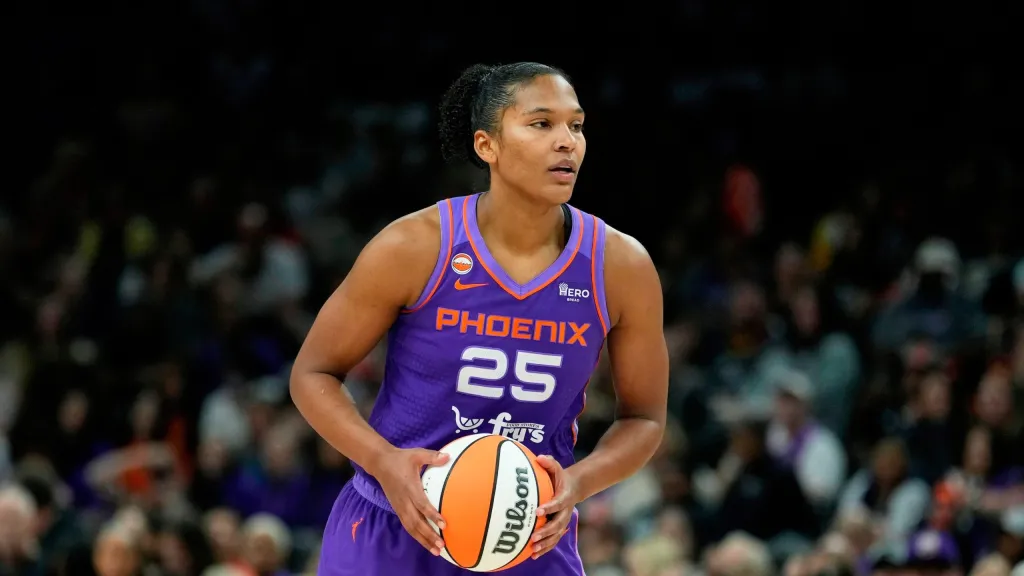
During a tightly contested match between Clark’s Indiana Fever and Phoenix Mercury in June, the Mercury’s Alyssa Thomas and Clark were on the court battling for a loose ball. Thomas’ arm briefly pressed against Clark’s neck during the scramble, but no foul was called. Following the game, Thomas was issued a flagrant one and suspended for one game by WNBA officials. The play triggered Clark’s supporters, and they aimed racial slurs and death threats at Thomas. Thomas responded by calling out WNBA commissioner Engelbert for not protecting athletes in the league.
“We still have yet to hear anything from Cathy. It’s no surprise,” Thomas shared in a press conference after her suspension. “You can see what’s being said on social media. It’s unfortunate, but as usual, she remains silent. That’s unfortunate when our lives are being threatened.”
It was only after Thomas’ statement that Engelbert responded to the threats sparked by Clark’s supporters.
“The WNBA vehemently condemns any and all forms of hate,” Engelbert said in a statement. “The safety and well-being of everyone in our community is always the league’s top priority. We are aware of Alyssa Thomas’ comments, and what she and her teammates have experienced is completely unacceptable and not representative of the WNBA community.”
Weeks later, Chelsea Gray of the Las Vegas Aces faced racial animus following a simple foul call that went against Clark. While driving to the basket, Gray was fouled on the arm by Clark, who collapsed to the ground and held her stomach as if she was in pain. Clark yelled at the referee, claiming that Gray had hit her, but video replay proved that Gray never initiated contact with Clark.
But an otherwise normal basketball play led to Gray enduring racial slurs and harassment. Following the game, Gray reposted a screenshot on Instagram of a man using a racial slur against her, and she wrote, “People act like we make this s— up.”
The post went viral, and the man, who worked for Hilton Grand Vacations, was fired within days.
Gray responded to the ordeal in a press conference, revealing that she and other WNBA players have faced ongoing harassment.
“Enough is kind of enough,” Gray said. “These messages are not the first time. It’s not. There was other stuff, too. I just decided to share that one. This time I got fed up with it, and I just decided to share it. And maybe I don’t share the other ones, but I know people will think twice.”
Clark never asked to become a symbol for those who aim hatred at Black women, but is she doing enough to distance herself from the position?
She issued a statement after hearing of the harassment Thomas experienced. “The harassment, the hate. None of that is OK,” Clark said. “There should never be a question of character, as I’ve always stood up here and said that, and that’s truly what I believe; that’s how I was raised. So, none of that is okay, and I don’t want anyone to experience that.”
It’s similar to another statement Clark made in 2025 after Angel Reese faced racial slurs while playing against the Fever in Indianapolis. “There’s no place for that in our game, there’s no place for that in society,” Clark said. “Certainly, we want every person who comes into our arena, whether player or fan, to have a great experience. I appreciate the league doing that. I appreciate that the Fever organization has been at the forefront of that.”
A competitive moment between Clark and Reese during the 2023 NCAA Championship game sparked a cultural division that followed both players to the WNBA. Their star power has coincided with the league’s recent emergence, but the overall success continues to be marred by the divisiveness initiated by Clark’s supporters.
“I would like for to have addressed her fans,” Christmas said. “Her fans are making threats, and they’re making racist comments. And it’s only racial coming from her fans. They don’t even really love the game. They just love her and then try to make it about race. At some point. I would like to see her stand against her fans when she sees them attacking some people that are on the court.”
Beyond her polarizing fanbase, Clark has also been accused of presenting herself as a victim and throwing tantrums on the court when things don’t go her way. During a recent game against the Golden State Valkyries, Clark used her hand to create distance while driving for a layup against the Valkyries’ Kiah Stokes. Clark fell to the ground after the layup and began berating referee Gerda Gatling while yelling, “Give me a f—-g call! I got fouled five times!” Replay video revealed that Stokes initiated no contact, and Gatling showed restraint by not giving Clark a technical foul.
The clip of Clark’s tantrum went viral, and she faced backlash online for her negative attitude.
“Caitlin Clark is a liar and the most dangerous type of white woman,” @mama4obama wrote on X. “One whose lies get Black women death threats. She wasn’t even touched and should have been thrown out of the game for the way she behaved toward the ref.”
“The Caitlin Clark experience serves as a microcosm of America’s divided socio-political atmosphere.”
The Caitlin Clark experience serves as a microcosm of America’s divided socio-political atmosphere. She has been chosen as a figurehead for hatred and division while her Black colleagues on the court remain prime targets.
It’s become an inescapable stain for a league that fought for years to garner interest and respect.
The opinions expressed in this commentary are those of the writer and not necessarily those of the AFRO.
The post How Black WNBA players became collateral damage in the Caitlin Clark culture war appeared first on AFRO American Newspapers.
Based on reporting by Afro-American – Washington.

Black History
NAACP Announces $20m Voter Registration Drive at National Convention in Chicago
GARY CRUSADER — The NAACP announced a $20 million voter registration campaign at its 117th annual convention in Chicago. The campaign aims to register between six and 10 million voters who did not participate in the last two elections.
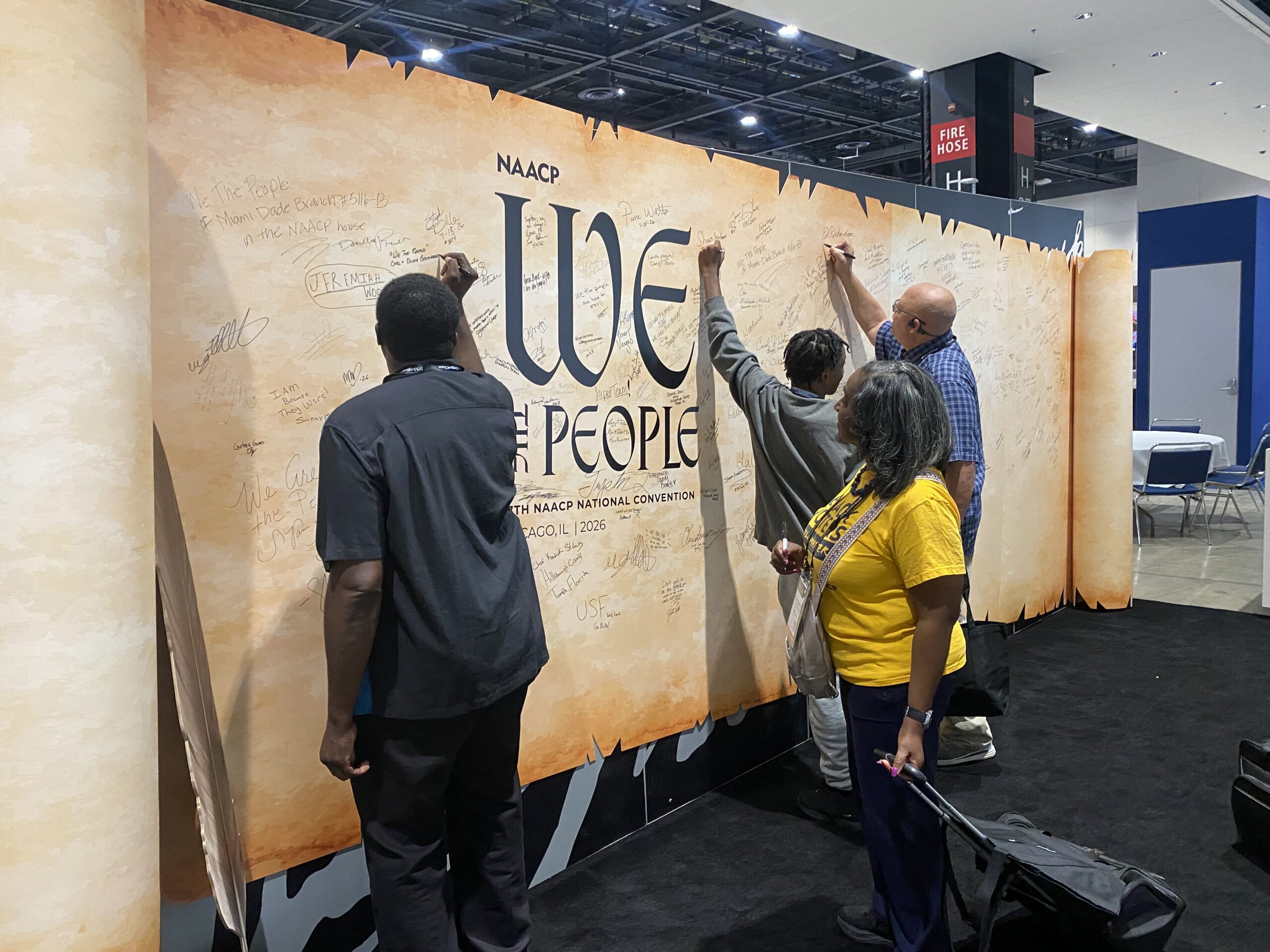
With just over three months before the midterm elections, the NAACP at its 117th annual convention in Chicago announced an unprecedented $20 million voter registration campaign ahead of the midterm elections.
The announcement kicked off the NAACP’s national convention at McCormick Place where thousands of visitors and delegates participated in workshops and seminars that stressed the organization’s theme of “We the People” and purpose of educating Blacks about their constitutional rights.
Throughout the week-long convention, vendors sold merchandise, media organizations held onsite interviews in “The HUB,” and visitors signed a massive “We the People” mural.
Governor J.B. Pritzker and Mayor Brandon Johnson were among the dignitaries who reinforced the NAACP’s message during the convention’s opening plenary.
Black voting rights have been under attack in the last several months when Louisiana, Tennessee, Alabama and Florida gutted historic Black congressional districts after the U.S. Supreme Court ruled such districts were unconstitutional and were no longer needed in modern times despite protections under the Voting Rights Act of 1965.
The NAACP, the nation’s oldest civil rights organization, is concerned those decisions will roll back political and economic gains Blacks have made in the last six decades.
NAACP Board Chairman Leon Russell told the opening session that the NAACP would undertake a $20 million voter registration and mobilization drive “to motivate six million to 10 million voters” who did not cast ballots in the last two elections to do so.

As part of the campaign, the NAACP plans to recruit “tens of thousands of volunteers to join the crusade to turn out millions of us this November.”
The plan will target voters in 14 states and 33 congressional districts, with the full list expected to be disclosed later.
“We must move 60 percent or more of all eligible voters to the polls,” Russell said.
The NAACP has a history of leading voter registration drives in Black neighborhoods across America.
In his speech, Pritzker said, “In Washington and across the country, extremists holding high office are working to erase Black history rather than learn from it, to take away voting rights instead of strengthening them, to divide us rather than unite us,” he said.
He added, “These are not simply disagreements over policy. These are challenges to the very idea that democracy belongs to all of us. Challenges to the very idea that we are all created equal.”
Pritzker said the phrase “We the People” reflects America’s ongoing effort to expand equality, noting that the nation’s founding ideals initially excluded enslaved people, women and other groups.
Mayor Brandon Johnson said, “For 117 years this incredible organization has helped bend the arc of history towards justice. And not because progress was inevitable, but because ordinary people made the extraordinary decision to organize, advocate and refuse to accept injustice as the reigning form of governance. That work has never been easy, and today it remains as urgent as it has ever been.
“Across this country we are witnessing wicked efforts to undermine fundamental rights, weaken Democratic institutions, and to turn neighbors against one another.
“We see attempts to silence the truth and erase our history and convince people that somehow division is stronger than solidarity. But history has taught us something very different. Every time people have been told to accept injustice, they have risen together to reject it. “
During Trump’s second term in office, the NAACP has filed more than 70 lawsuits to stop his grasping and often unconstitutional moves to grab total power.
Pritzker said “Illinois has been at the forefront of the struggle for freedom and equality” ever since Jean Baptiste Point du Sable, a non-white, was the first permanent resident of what is now Chicago, Pritzker noted.
Pritzker also said Illinois also gave the nation the crusading African American journalist Ida B. Wells, and it elected more African American members of Congress than any other state. He said Illinois gave the nation the late civil rights leader Jesse Jackson and “a young community organizer” who eventually went from Chicago to the White House, Barack Obama.
“But such progress is not inevitable,” the governor warned. “It requires people willing to sacrifice. None of this is by accident. It is because Black America shows up, reminding us of the painful part of our history while giving us hope for the future.”
Based on reporting by Gary Crusader.
Business
Surveillance Pricing Fight: State Senate Debates Bill Banning Retailers from Using AI to Set Prices Based on a Buyer’s Profile
OAKLAND POST — Currently, there is no precise public data quantifying how many Black residents in California are actively affected by surveillance pricing. However, because the practice leans heavily on ZIP codes and localized demographic tracking, algorithmic pricing models frequently result in higher costs for Black and non-white communities compared to others, according to the Electronic Frontier Foundation (EFF), a leading nonprofit organization defending civil liberties in the digital space

Surveillance pricing—the algorithmic practice of using personal data to determine individualized costs for goods and services—is widespread in California, according to Assemblymember Chris Ward (D-San Diego). He warns that this system is actively impacting consumers across the state, and Black Californians could be specifically targeted.
Ward’s Assembly Bill (AB) 2564, the Surveillance Pricing Act, aims to prohibit businesses from using this practice.
“Surveillance pricing is a growing phenomenon that a lot of people don’t realize is already happening,” Ward told California Black Media (CBM) at the State Capitol on June 29.
On June 22, the bill passed out of the Senate Privacy, Digital Technologies, and Consumer Protection Committee with a 5-2 vote and was re-referred to the Committee on Judiciary for consideration. On May 27, the Assembly voted to advance AB 2564 with a 42-21 vote.
Currently, there is no precise public data quantifying how many Black residents in California are actively affected by surveillance pricing. However, because the practice leans heavily on ZIP codes and localized demographic tracking, algorithmic pricing models frequently result in higher costs for Black and non-white communities compared to others, according to the Electronic Frontier Foundation (EFF), a leading nonprofit organization defending civil liberties in the digital space.

Justin Brookman, a public-interest lawyer, supports AB 2564. His organization is an official sponsor of the bill. He advocates on behalf of Consumer Reports.
“We found that people shopping for the exact same item at the exact same time, and the exact same store, were getting different prices. In some cases, up to 23% higher,” Brookman said. “So, one person looking at a jar of Skippy peanut butter, it was $2.99. Another person, same exact time, it was $3.69.”
AB 2564 is primarily opposed by a coalition of corporations and technology industry associations. They argue that the bill’s language is overly broad, outlaws common consumer-friendly discounts, and creates costly litigation risks for small businesses.
Chamber of Progress – a tech industry association that lobbies for public policies that expand digital commerce and technological advances – says that banning data-driven personalization would wipe away targeted digital coupons that families count on to prolong their budgets.
In a March 18 written letter to the Assembly Committee on Privacy and Consumer Protection, Robert Singleton, senior director of Policy and Public Affairs for California and the U.S. West at the Chamber of Progress, urged the body to oppose AB 2564.
“We share the legislature’s concern about affordability,” Singleton wrote. “The cost of living is the top issue facing American families, and we understand the impulse to ensure consumers are getting a fair deal. But this bill risks backfiring on the families it aims to help.
Assemblymember Lori Wilson (D-Suisun City) supported and voted for the bill in the Assembly on May 27, but she still has questions about a “litigation risk” that could be costly.
“Every business or retailer that is spending their time battling courts is spending resources, which drives the cost up for everyone,” said Wilson, a member of the California Legislative Black Caucus (CLBC).
WORK FROM HOME
Home-based business with potential monthly income of $10K+ per month. A proven training system and website provided to maximize business effectiveness. Perfect job to earn side and primary income. Contact Lynne for more details: Lynne4npusa@gmail.com 800-334-0540


How Black WNBA Players Became Collateral Damage in the Caitlin Clark Culture War

NAACP Announces $20m Voter Registration Drive at National Convention in Chicago

Starting This Summer, California Car Buyers Can Get an Instant $3500 Off the Cost of Electric Vehicles

Surveillance Pricing Fight: State Senate Debates Bill Banning Retailers from Using AI to Set Prices Based on a Buyer’s Profile

Oakland Children’s Hospital Workers and Patients Rally for Pediatric Medical Care

Opinion: When Politicians Start Sanitizing One Chapter of History, They’re Coming After The Whole Book

Beyond Politics: California Legislators Across Party Lines Celebrate Lori Wilson at 50

NPRC to Meet with California Attorney General’s Office on to Urge Guardianship Reform

Mount Zion MBC, Church of Jesus Christ of Latter-day Saints Partner to Bring 29,000 Meals to Alameda County

Councilmember Houston Helps Deter Trend to Award Contracts to Suburban Companies

Rep. Garamendi, House Democrats Demand Trump Administration Abandon Illegal Plans to Dismantle Civil Rights, Special Ed Offices

Council Gives Approval for $125 Million Oakland Coliseum Sale to AASEG

Job Readiness, Housing Resources Among Services Provided at Coliseum Job Fair

Free Back-to-School Summer Family and Community Event Is Coming to Richmond

New State Law Limits Student’s Cell Phone Use During School Hours
Mount Zion MBC, Church of Jesus Christ of Latter-day Saints Partner to Bring 29,000 Meals to Alameda County
Oakland Children’s Hospital Workers and Patients Rally for Pediatric Medical Care

Saving Black Mothers Starts Outside the Hospital

IN MEMORIAM: Oakland Dance Legend Reginald Ray-Savage, 67

Gov. Gavin Newsom Signs Law Streamlining Affordable Housing Rules

Oakland Celebrates $125 Million Coliseum Sale


NPRC Heads to Washington to Elevate Adult Guardianship Reform at National Whistleblower Summit

The Part of Buying a Home That No Real Estate Show Ever Prepares You For

Oakland Post: Week of June 17 – 23, 2026

Agricultural Engineer Effie Gant Plans Bay Area Farmers Market Initiative

Ferry Fares to Increase July 1 as Ridership Hits Record Highs

NCBW-OBAC Champions Black Women Entrepreneurs at Business en Blaque Expo

UC Berkeley Named Top Public University in the U.S. and No. 7 in the World by ‘U.S. News’

Oakland Post: Week of July 1 – 7, 2026

The Conversation With Al McFarlane 6/23/26

Media Monday 6/22/26

LIVE! ASK ALMA! — TUES. 6.23.26 7PM EST

Car Buying Secrets: 4 Hidden Checks Before You Sign!

Is This 550 HP Charger Worth YOUR Money? AutoNetwork Review

Celebrating Juneteenth – Frederick Douglass on education and resistance

LIVE! — ASK ALMA! — TUES. 6.19.26 7PM EST

Hyundai Ioniq 5 Parking, Safety, and 360 View #shorts

2025 Ioniq 5 New Wiper & Powerful Performance! #shorts

Electric SUV Range: Is 259 Miles Enough? #shorts

EV Charging: How Fast Can You Charge an Electric Vehicle? #shorts

Biometric Cooling… Messaging Seats…Come on! 2025 Infiniti QX80 Autograph 4WD

Charged Up: Witness the Magic of a Fully Electric Car! #shorts

Range Rover Sport PHEV Included…: See What’s Inside This Luxury SUV! #shorts

Invisible Hood View: Perfect Parking with X-Ray Vision! #shorts
-
 Business14 hours ago
Mount Zion MBC, Church of Jesus Christ of Latter-day Saints Partner to Bring 29,000 Meals to Alameda County
-
 Business13 hours ago
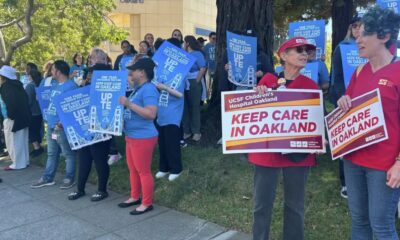
Oakland Children’s Hospital Workers and Patients Rally for Pediatric Medical Care
-
 Black History5 days ago
Saving Black Mothers Starts Outside the Hospital
-
 Business3 days ago
Gov. Gavin Newsom Signs Law Streamlining Affordable Housing Rules
-
 Black History1 week ago
Oakland Celebrates $125 Million Coliseum Sale
-
 Community1 week ago
NPRC Heads to Washington to Elevate Adult Guardianship Reform at National Whistleblower Summit
-
 Business4 days ago
The Part of Buying a Home That No Real Estate Show Ever Prepares You For
-
 Activism1 week ago
Agricultural Engineer Effie Gant Plans Bay Area Farmers Market Initiative
