
Economy
$62B Education Cuts Proposed, College Aid Could be Slashed
PRECINCT REPORTER GROUP NEWS — Every budget defines priorities and values. To put it another way, what’s really important in life gets supported financially. For many families, having a home, food, and utilities usually rank pretty high. Then there are other budgetary concerns like saving for college or having a ‘rainy day’ fund to cover less frequent costs that can be much higher than the size of the next pay check.

By Charlene Crowell
Every budget defines priorities and values. To put it another way, what’s really important in life gets supported financially. For many families, having a home, food, and utilities usually rank pretty high. Then there are other budgetary concerns like saving for college or having a ‘rainy day’ fund to cover less frequent costs that can be much higher than the size of the next paycheck.
Government budgets, built on taxpayer dollars, also reveal priorities. At the federal level, budgets are proposed by the executive branch, but it is the legislative branch that passes and funds budgets. What is in the best interest of the nation is supposed to be the guiding force in government budgets.
But as Sportin’ Life sang in the folk opera Porgy and Bess, “It ain’t necessarily so”.
The White House’s FY 2020 proposal cuts Education funding by $62 billion compared to that of FY 2019. Even worse, as the cost of higher education continues to climb, federal student aid would be seriously slashed while other programs would be totally eliminated.
Some of the most disturbing college federal cuts affect programs that lessen the amount of student loans that need to be borrowed for every academic term. As rising college costs have worsened the financial challenge faced by many Black and other low-wealth families, the availability of grant programs that do not have to be repaid and/or work-study programs are key sources for many college students and their families.

Among its many revisions, the Trump Administration stands ready to risk a sizeable portion of the proposed $7.25 billion in Pell Grant funding next year. This program is the single largest source of grant aid for low-income households for post-secondary education.
On March 26, the Fiscal Year (FY) 2020 Education budget was the focus of a hearing before the House Appropriations Subcommittee for Labor-Health and Human Services-Education. Secretary Betsy Devos delivered testimony that expanded upon previously released materials from the Trump Administration.
“Since President Trump took office, Congressional appropriations for U.S. Department of Education programs have increased dramatically – in spite of the Administration’s call to slow spending,” said Secretary DeVos. “We are not doing our children any favors when we borrow from their future in order to invest in systems and policies that are not yielding better results.”
In response, Connecticut’s Rep. Rosa DeLauro, the subcommittee chairwoman did not mince words. “This budget underfunds education at every turn”, said DeLauro who added “This budget inflicts harm.”
Even Rep. Tom Cole from Oklahoma who serves as the subcommittee’s Ranking Member viewed the White House proposal as “short-sighted”.
Representatives DeLauro and Cole were absolutely correct.
The Work-Study program that brings campus-based jobs to students would suffer a double blow. Its monies would be reduced by 55 percent and remaining funds would be shared with proposed pilot program that targeted to private sector employers for workforce development of nontraditional and low-income students. That’s the window dressing on these cuts.
The Work-Study program that received over $1.2 billion in 2019 would be cut to $500.4 million. Secondly, instead of students working on campus, they would need to figure out how to reach employment at private business.
Not every student has a car. Nor is public transit always available near college campuses. These businesses would supplement their revenue streams with public monies but the profits derived would still be private. Previously, Work-Study was jointly funded by the federal government paying 75 percent of hourly wages, with the remaining 25 percent paid by the college employer.
What for-profit business wouldn’t want the government to pick up 75 percent of its labor costs? Seems that the private business – not the student – is the greater concern with this budget.
“Betsy DeVos has some explaining to do – her disinterest in prioritizing quality and affordable education for students is disheartening and erodes the confidence the public has in the Department of Education,” said Debbie Goldstein, an EVP with the Center for Responsible Lending.
Currently, the formula-based Pell Grant award averages $4,251 per participating student. Next year as proposed, the program’s average award will be slightly less at $4,149 and traditional grant recipient students would be forced to share those funds with others enrolled in workforce development training that does not accrue credit hours or traditional academic terms.
Regular readers of this column may recall, many career and technical training institutions are also for-profit entities that in recent years have either failed to provide the training promised, or the earnings assured by admissions personnel – or both. In the worst-case scenarios, tens of thousands of students have been enrolled at the time of closures that came with little or no notice.
The Supplemental Education Opportunity Grant is need-based and financially helps low-income, undergraduate students. For the past two fiscal years, this program was funded at $1.7 billion. If the Trump Administration’s proposal holds, no monies will support this program next year.
The Iraq and Afghanistan Service Grants are available to students whose parent or guardian was a member of the Armed Forces and died as a result of their military deployment in either Iraq or Afghanistan after September 11, 2001. In FY 2019, the average grant in this program was $5,293. In FY 2020, the White House would end it with no appropriation.
These are only a few of the cuts proposed to higher education at a time when education is more important today than ever before. The global economy requires a highly-skilled and knowledgeable workforce. It seems so ironic that this White House keeps placing businesses before the needs of people.
“Instead of punishing for-profit institutions that have deceived students and encouraged them to take on unaffordable levels of student debt, Secretary DeVos will defend President Trump’s proposal to extend taxpayer money to finance unproven short-term programs, many of which will be offered by these very same for-profit college,” added Goldstein.
Here’s hoping that Congress will hear a loud outcry on gutting federal financial aid. Enacting a budget that represents the needs of people should and must prevail.
Charlene Crowell is the Communications Deputy Director at the Center for Responsible Lending. She can be reached at Charlene.crowell@responsiblelending.org.
This article originally appeared in the Precinct Reporter Group News.









Business
California Hispanic Chambers of Commerce Unveils: ‘Powering the Future’ Theme for 47th Annual Statewide Convention
POST NEWS GROUP — For nearly 50 years, the CHCC has been the frontline champion of California’s small-business ecosystem. As the economic landscape evolves, “Powering the Future” signals bold momentum—emphasizing the innovation, resilience, and leadership needed to fuel the next generation of entrepreneurs and community leaders. The theme bridges the CHCC’s foundational advocacy over the past 47 years with a strategic vision for rapid economic transformation.

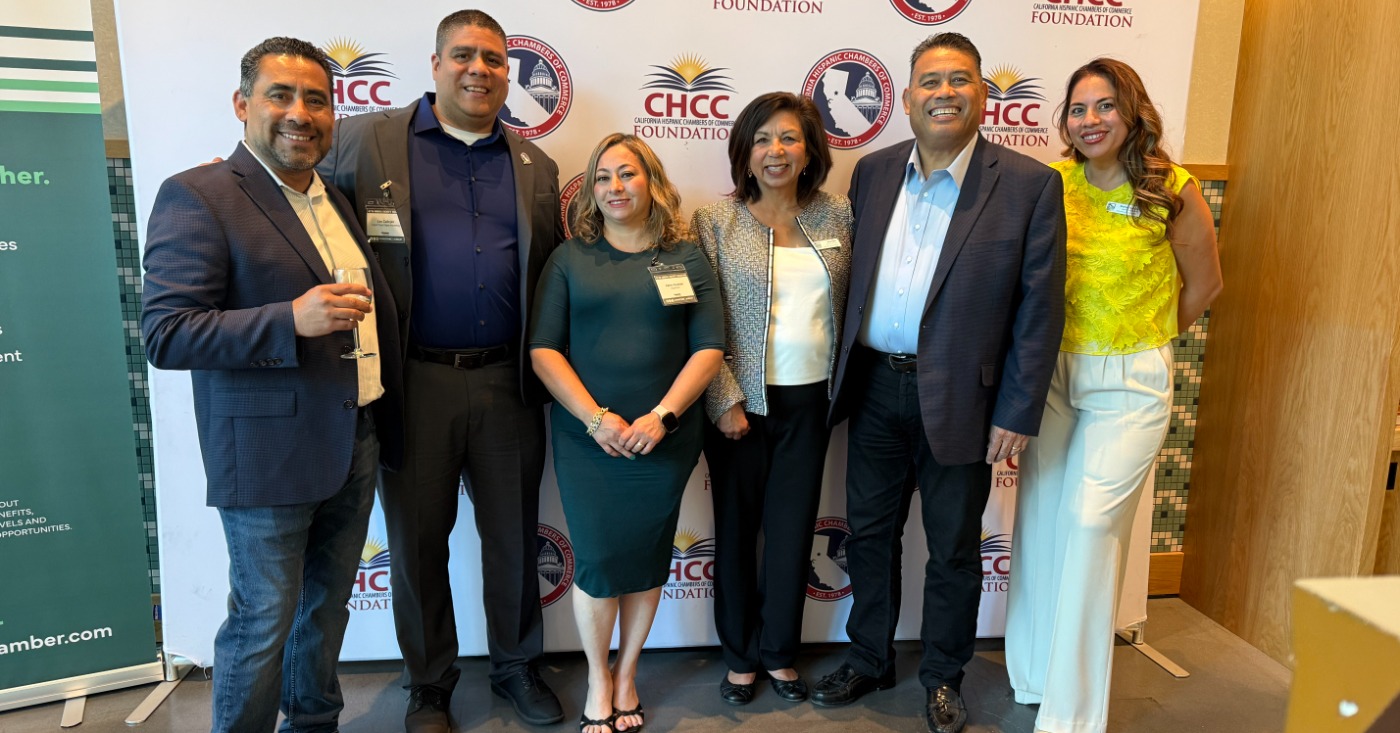
The premier August event in Oakland will unite business leaders, policymakers, and innovators to drive the next generation of California’s economic growth.
The California Hispanic Chambers of Commerce (CHCC) has officially announced “Powering the Future” as the theme for its 47th Annual Statewide Convention. The landmark event will be held August 19-21 at the Oakland Marriott City Center in Oakland, California.
For nearly 50 years, the CHCC has been the frontline champion of California’s small-business ecosystem. As the economic landscape evolves, “Powering the Future” signals bold momentum—emphasizing the innovation, resilience, and leadership needed to fuel the next generation of entrepreneurs and community leaders. The theme bridges the CHCC’s foundational advocacy over the past 47 years with a strategic vision for rapid economic transformation.
Driving Innovation and Economic Influence
As California leads global trends in technology, clean energy, and entrepreneurship, Hispanic-owned businesses are at the helm. From harnessing artificial intelligence and accelerating digital transformation to pioneering sustainable practices, Latino entrepreneurs are actively shaping tomorrow’s industries.
“Hosting this convention in Oakland is deeply meaningful,” said Noel Gallo, who represents Council District 5. “Approximately 28% of Oakland’s population is Latino, and their contributions shape every aspect of our civic, cultural, and economic life.”
Latino‑owned businesses are central to our city’s growth; they drive job creation, revitalize commercial corridors, strengthen neighborhood identity, and contribute to innovation across sectors including construction, hospitality, education, retail, arts, professional services, and more, Gallo asserts.
“These enterprises do more than generate revenue; they anchor family legacies, nurture community pride, and create spaces where culture and commerce meet,” Gallo said.
“Following a period of significant economic transformation, ‘Powering the Future’ is more than a theme—it is a collective call to action,” said Julian Cañete, president and CEO of the CHCC. “Our businesses and future leaders aren’t merely adapting to change; they are driving it. This convention will showcase the innovation and leadership needed to build a stronger, more prosperous California for generations to come.”
Cañete is also excited to have Oakland as the organization’s host city. Noting Oakland’s historical significance and deep-rooted diversity “From its legacy as center of social movements to its modern identity as a hub for innovation, sustainability, and small business growth, Oakland embodies the resilience and creativity that define our state,” Cañete added. “We are proud to contribute to this dynamic community’s ongoing momentum and economic vitality.”
Three Days of Impact, Connection, and Advocacy
The CHCC Annual Convention empowers Hispanic and diverse businesses and communities while fostering connections and advancing economic opportunities. The convention features impactful presentations on business development, current business trends, economic and community development, and policy-oriented discussions.
Attendees can connect with business leaders, thought leaders, elected officials, and other Hispanic and diverse small business and community leaders. Participants establish strategic, long-lasting partnerships through direct personal engagement, best-practice sharing, interactive dialogue, networking workshops, and more.
The agenda includes an annual business matchmaking program, dynamic panels and speakers, an exhibition hall, awards ceremonies, and meal events highlighting the remarkable achievements of Hispanic and diverse businesses and communities.
The CHCC Annual Awards celebrate Hispanic and diverse companies and communities for their hard work, ingenuity, dedication, and contributions to California’s economy. The CHCC Annual Convention also aims to advance a diverse supply chain and create expanded business opportunities for diverse entrepreneurs and communities.
The Oakland Hispanic Chamber of Commerce is the source for this report.

Business
Returning to Its Roots, the Oakland Black-Eyed Pea Festival Partners with the Freedom Farmers Market Sept. 12
POST NEWS GROUP — Freedom Farmers’ Market (FFM) vendors sell produce and promote wellness and nutrition through organic herbs, massage, and other gift items from July through October on the second and fourth Saturdays at a dozen canopies in the last block of Shattuck Avenue, where it merges with Telegraph Avenue.

By
The Oakland Black-Eyed Pea Festival (BEPF), a celebration of African American traditional music, food and art, will return to its roots through a partnership with Farms to Grow, Inc., the hosts of the Freedom Farmers’ Market on Sept. 12.
Now in its 11th year, the downsized festival sponsored by Omnira Institute will open with presentations by Wakan Wiya Two-Spirit Drum, a drum invocation for the ancestors by Awon Ohun Omnira, a performance by Andre Thierry of Accordion Soul, and most importantly, fresh black-eyed peas for sale.
Freedom Farmers’ Market (FFM) vendors sell produce and promote wellness and nutrition through organic herbs, massage, and other gift items from July through October on the second and fourth Saturdays at a dozen canopies in the last block of Shattuck Avenue, where it merges with Telegraph Avenue.
Over the years, FFM vendors have appeared at the Black-Eyed Pea Festival and vice versa, so this collaboration is like a family reunion.
Farms to Grow, Inc. Executive Director Elaine Smith said the collaboration with Omnira Institute was an opportunity she couldn’t refuse. “People talk about community and unity for Black people – I always want to be an example of what has to be done,” Smith said. “Anyway that we can partner with our people, we want to do that.”

Charlotte Jackson, a longtime vendor with FFM and the festival, had been known for her jellies, jams and chow-chow through Pots n’ Jars. For the last several years, she hasn’t been able to find a commercial kitchen she can afford, so she began selling vegan soap and skin care products that her son and his partner produce under the name Lather and More.
“It’s been a blessing,” said Jackson, who will tell her customers that although they can order the wares from the website, there’s no such thing as ‘smell-avision.” From her table, she encourages passers-by to take a sniff of the soaps, then directs them to the nearby booths.
Jackson functions as a sort of ‘town crier’ of ‘buying Black,’ never failing to encourage Black people to take their mule or Pontiac or Chevrolet and steer it toward Black businesses like Mandela Market.
Likewise, the Black-Eyed Pea Festival was established to encourage Black entrepreneurship by providing a space for Black creatives to sell their handmade or original designs and products without competing with commercially produced goods.
It also served as a way to both commemorate and invigorate memory of the once-thriving Black community of West/North Oakland before it was divided by highways, BART, and then ravaged by the crack cocaine epidemic.
“For one day, I wanted to invoke the success of that community through the sound of music, the taste of soul food and black-eyed peas and the beauty of our art,” Ravernell said.
Once deciding to follow through on the idea of holding a festival celebrating African American traditions, Ravernell settled on using the black-eyed pea as its symbol because of its pride of place in Black people’s consciousness on New Year’s Day and because the peas were originally cultivated in Africa.
Learning that Fresno farmer Wil Scott, former president of the California African American Farmers Association, grew black-eyed peas as well as other legacy crops that are the foundation of a soul food menu, Ravernell was intent on ensuring Scott’s presence at the first festival in 2014. Whenever he could, and whenever the weather yielded a bountiful crop, Scott would bring his black-eyed peas to the festival, shelled or on the pods.
Originally cultivated in Africa, the black-eyed pea is believed to have been brought to the U.S. hidden in the hair of African captives brought to the Western Hemisphere during the holocaust of the Atlantic Slave Trade.
Known to grow plentifully even in poor soil, the pea was associated with abundance in Africa and later, in the U.S., with good luck.
She also learned that black-eyed peas nourish poor soil, that they are a very good source of nutrition, and that they probably contributed to the longevity of the enslaved.
“I thought the black-eyed pea, its story and its significance for Black people made it a great symbol to represent Black culture,” she said. In spite of everything they endured, Black people emerged from slavery and Jim Crow as masters of making a lot from a little, creating a culture that would be emulated and imitated at home and abroad.
Feeling that many people know only the most recent iterations of Black music – Hip Hop and R&B – she created the festival to promote the music of earlier eras, which reflect the thoughts and feelings of Black people over time.
That’s why the festival highlights straight-ahead jazz, gospel, zydeco and the Second Line of the New Orleans jazz funeral.
“It’s not enough to remember,” Ravernell said. “We need to actively nourish the roots of our culture.”
Business
From Blueprint to Breakthrough: Tackling Affordable Housing in Oakland
Mercy Housing California and JPMorganChase help neighborhoods—and residents—thrive. Finding an affordable place to live remains a challenge for many as widespread housing shortages persist across the U.S. Rising home prices and high interest rates have made homeownership inaccess

Mercy Housing California and JPMorganChase help neighborhoods—and residents—thrive.
Finding an affordable place to live remains a challenge for many as widespread housing shortages persist across the U.S. Rising home prices and high interest rates have made homeownership inaccessible to a large portion of the population. Meanwhile, as rental demand increases, the number of renters facing affordability challenges is rising.
The State of the Nation’s Housing 2025 by Harvard University’s Joint Center for Housing Studies reveals that cost burdens for renters reached another record high in 2023. Similarly, the JPMorganChase Institute reports that renter affordability is declining, forcing people to devote more of their take-home pay to housing costs. There is a growing need for affordable housing across the U.S., and that rings true here in Oakland.
To close that gap, it’s essential that all Oakland residents share in its growth, with housing options that accommodate a range of needs and budgets. For Mercy Housing California, this meant delivering a concrete solution to the local community, resulting in housing for individuals and families who otherwise might not have been able to live in the area.

For older adults living on fixed or limited incomes—including seniors who had been without a stable place to call home—The Eliza offers something that can feel out of reach in today’s housing market: a place to belong in the Oakland community where they’ve put down roots. Developed by Mercy Housing California with support from J.P. Morgan, The Eliza brings 97 new homes to seniors aged 62 and older, with 20 of those homes set aside for seniors who were formerly homeless. Here, “affordable” means rents are tied to what residents can actually pay so that a home stays within reach rather than consuming a household’s entire budget.
“As housing costs continue to rise across California, far too many older adults living on fixed incomes face the heartbreaking risk of displacement or homelessness, often for the first time later in life,” said Tiffany Bohee, President of Mercy Housing California. “Here, seniors can age in place independently, access onsite services tailored to their needs, and find a community where they can truly feel at home. Thanks to the commitment of partners like JPMorganChase, we’re helping ensure Oakland remains a place where seniors of all incomes can age with dignity, stability, and belonging.”
“We’re proud of the far-reaching impact this project will have. It reflects Mercy Housing California’s mission to uplift our communities and expands the supply of high-quality, affordable homes,” said James Vossoughi, Community Development Banking, J.P. Morgan. “Every additional housing unit matters—and increasing the number that are affordable is critical.”
A broader commitment to Oakland’s future
While The Eliza is foundational, the vibrancy of a community depends on much more. In Oakland, the firm provides banking services to more than 675,000 customers and works across sectors to expand economic opportunity. Over the last five years, JPMorganChase has invested $35 million in local nonprofit organizations, supported 61,600 small business clients and delivered financial health education to thousands of residents to broaden access to banking, financial health resources, homeownership and other wealth building tools.
“As we work with local stakeholders to expand housing options, JPMorganChase’s goal is to create inclusive economic opportunity for all,” said Dan Schrauth, Managing Director, J.P. Morgan Private Bank and Chair, Bay Area Market Leadership Team, JPMorganChase. “When our communities thrive, we all thrive.”
The journey to close the affordable housing gap continues, with industry leaders like Mercy Housing, Inc. finding a path forward to bring real solutions to the Oakland community.
Locally and nationally, this project reflects JPMorganChase’s American Dream Initiative, a commitment to scaling local housing solutions across the country—learn more at www.jpmorganchase.com/America.
You can also read more about what’s happening in the Bay Area at https://www.jpmorganchase.com/communities/sf-bay-area.

WORK FROM HOME
Home-based business with potential monthly income of $10K+ per month. A proven training system and website provided to maximize business effectiveness. Perfect job to earn side and primary income. Contact Lynne for more details: Lynne4npusa@gmail.com 800-334-0540


Four Candidates, Including Incumbent Barbara Lee, Qualify for Oakland Mayor’s Race

Oakland Observes Black August with Block Parties, Film Showings, Workshops

Oakland Post: Week of August 12 – 18, 2026

COMMENTARY: Why Local School Tax Measure G1 Will Not Be on the November Ballot

California Hispanic Chambers of Commerce Unveils: ‘Powering the Future’ Theme for 47th Annual Statewide Convention

Returning to Its Roots, the Oakland Black-Eyed Pea Festival Partners with the Freedom Farmers Market Sept. 12

Less Affluent School Districts, Including Sacramento City, Face Threat of State Takeover

From Blueprint to Breakthrough: Tackling Affordable Housing in Oakland

NPRC Scores First Advocacy Victory: David Shaw Finally Gets His Wish to ‘Go Home’

ESSAY: California Can Close Its Colorectal Cancer Gap

Car Wash Workers Cope with Lingering Impacts of ICE Raids

Misty Copeland Shapes Ballet’s Tomorrow

As Part of Your Back-to- School Checklist, Vaccinate

As Part of Your Back-to- School Checklist, Vaccinate

Congresswoman Simon Demands Investigation into Trump’s Abuse of Emergency Powers for Coal Export Terminal in West Oakland

Department of Homeland Security Demands California Secretary of State Shirley N. Weber Scrub Voter Rolls

Oakland Children’s Hospital Workers and Patients Rally for Pediatric Medical Care

New Judge Could Decide if Karmelo Anthony Gets a New Trial

“The Power to See Threats Sooner”: Gov. Newsom, Safety Officials Showcase California’s Investments in Hi-Tech Wildfire Prevention

Alpha Kappa Alpha Sorority, Inc. Celebrates New North Atlantic Regional Director

Surveillance Pricing Fight: State Senate Debates Bill Banning Retailers from Using AI to Set Prices Based on a Buyer’s Profile

Mount Zion MBC, Church of Jesus Christ of Latter-day Saints Partner to Bring 29,000 Meals to Alameda County

California Sen. Padilla Joins Colleagues to Introduce Bill Imposing Term Limits on Supreme Court Justices

Starting This Summer, California Car Buyers Can Get an Instant $3500 Off the Cost of Electric Vehicles

COMMENTARY: You Are Already Paying for the AI Boom

California Bill Would Let Abuse Victims Use Trauma as Legal Defense for Violent Crime
Less Affluent School Districts, Including Sacramento City, Face Threat of State Takeover
Car Wash Workers Cope with Lingering Impacts of ICE Raids

Fed Court to Decide Landmark First Amendment Case

Gov. Gavin Newsom Signs Law Streamlining Affordable Housing Rules

The Conversation With Al McFarlane 6/23/26

Media Monday 6/22/26

LIVE! ASK ALMA! — TUES. 6.23.26 7PM EST

Car Buying Secrets: 4 Hidden Checks Before You Sign!

Is This 550 HP Charger Worth YOUR Money? AutoNetwork Review

Celebrating Juneteenth – Frederick Douglass on education and resistance

LIVE! — ASK ALMA! — TUES. 6.19.26 7PM EST

Hyundai Ioniq 5 Parking, Safety, and 360 View #shorts

2025 Ioniq 5 New Wiper & Powerful Performance! #shorts

Electric SUV Range: Is 259 Miles Enough? #shorts

EV Charging: How Fast Can You Charge an Electric Vehicle? #shorts

Biometric Cooling… Messaging Seats…Come on! 2025 Infiniti QX80 Autograph 4WD

Charged Up: Witness the Magic of a Fully Electric Car! #shorts

Range Rover Sport PHEV Included…: See What’s Inside This Luxury SUV! #shorts

Invisible Hood View: Perfect Parking with X-Ray Vision! #shorts
-
 Featured7 days ago
Department of Homeland Security Demands California Secretary of State Shirley N. Weber Scrub Voter Rolls
-
 Business3 weeks ago
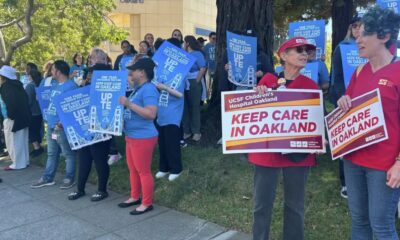
Oakland Children’s Hospital Workers and Patients Rally for Pediatric Medical Care
-
 #NNPA BlackPress2 weeks ago
New Judge Could Decide if Karmelo Anthony Gets a New Trial
-
 Environment1 week ago
“The Power to See Threats Sooner”: Gov. Newsom, Safety Officials Showcase California’s Investments in Hi-Tech Wildfire Prevention
-
 Black History2 weeks ago
Alpha Kappa Alpha Sorority, Inc. Celebrates New North Atlantic Regional Director
-
 Business3 weeks ago
Surveillance Pricing Fight: State Senate Debates Bill Banning Retailers from Using AI to Set Prices Based on a Buyer’s Profile
-
 Business3 weeks ago
Mount Zion MBC, Church of Jesus Christ of Latter-day Saints Partner to Bring 29,000 Meals to Alameda County
-
 Featured7 days ago
California Sen. Padilla Joins Colleagues to Introduce Bill Imposing Term Limits on Supreme Court Justices
